Southern
Pacific
1218
Wheel Profiling and Truck Work
Wheel Profiling and Truck Work
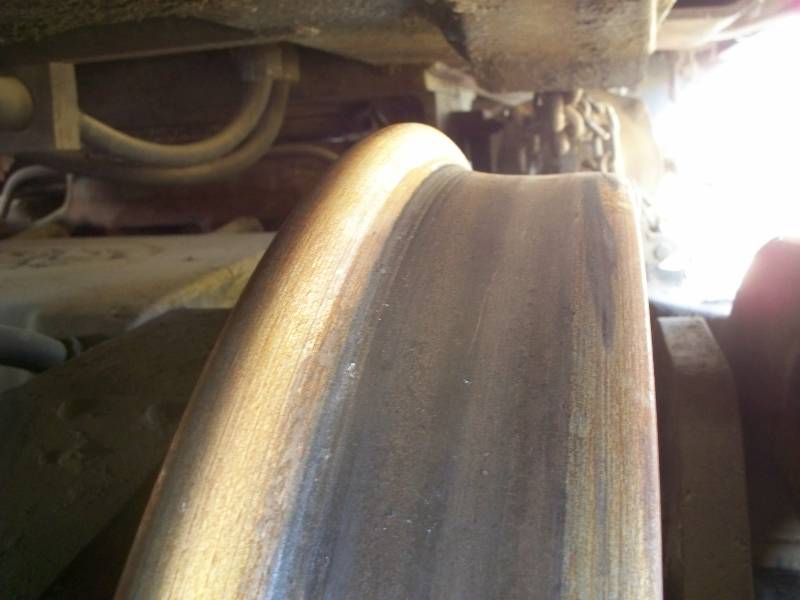
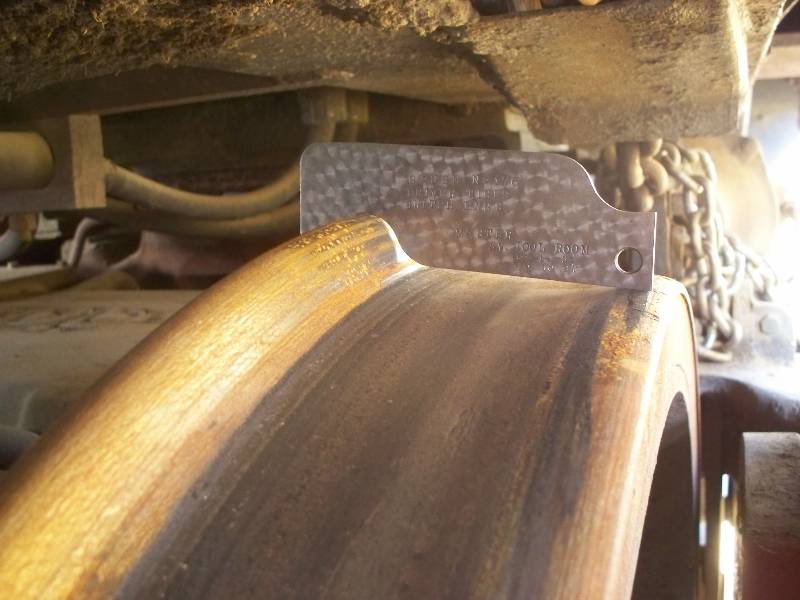
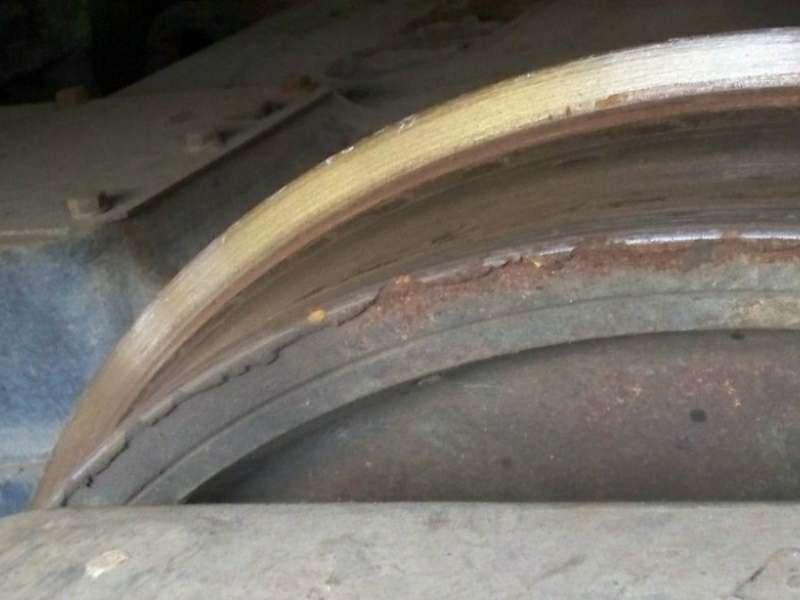
The wheels on our S6 were horrible. The flanges were too high, the treads were badly hollowed out (which means that they were shaped like a pulley) and there were some pretty severe flat spots. They were also afflicted with the tread crawling out over the edge of the wheel. The only saving grace was the fact that the wheels had enough material on them to allow profiling. We have a gadget called a "Iron Horse Wheel Lathe which provides an economical means of turning wheels. The process is a bit labor intensive but the results can return a wheel to a legal contour.
 |
 |  |
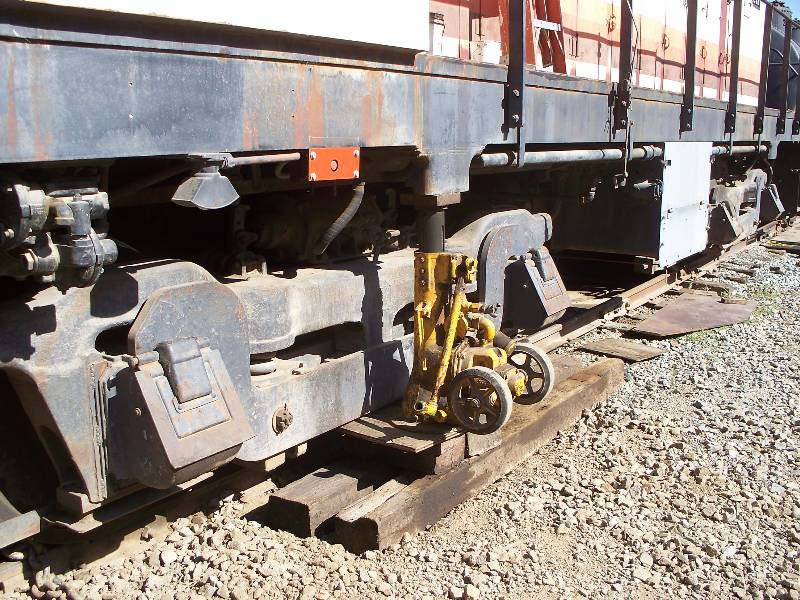
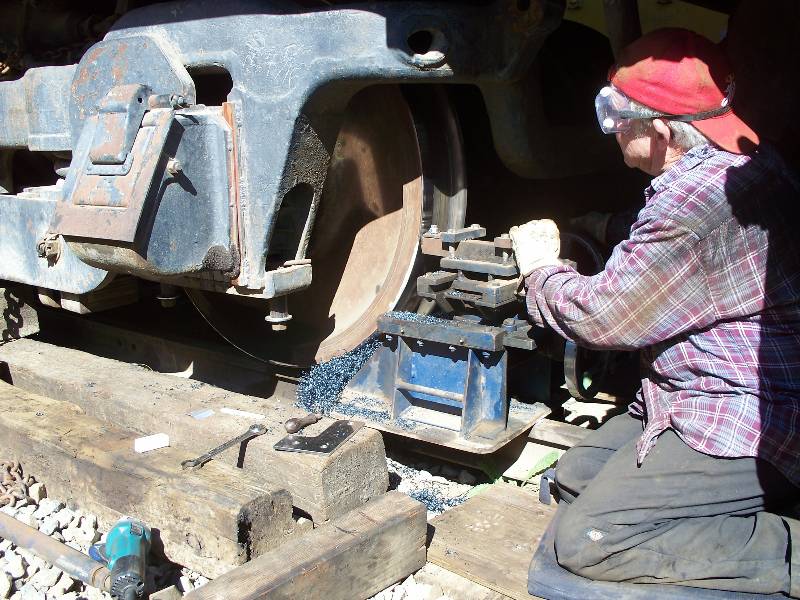
To start, the 1218 had to be positioned on a stretch of track where it could sit for a while as some jacking is necessary. We had to jack the locomotive weight off of the truck to prevent undue wear on the axle journal bearings. Next, the brake mechanism on the operative truck was disconnected and the brake swing arms removed. The traction motor is jacked up about an inch above the rail and then the lathe is mounted to the rail, leveled, and secured. Usually, the motor leads would be disconnected and connected to an arc welder but, due to the way the S6 is wired, I decided to simply disconnect the main generator, connect the welder to the existing electrical system in the locomotive and spin the motor just as though the diesel engine were running. I built a "remote control" box which is a simple toggle switch in a box connected through a cord to one of the power contactors in the locomotive. This allows me to instantly turn the power to the motor on and off. Of course, safety required that the truck still on the ground would have its brakes fully applied so the 1218 was connected to the house air compressor. For a short movie of the lathe in action, click here. (Note: The sparks in the video are due to the extremely hard carbide cutting bit hitting the very hard old wheel material) Photo #4 illustrates Jon and Rich disconnecting the inside end of the straddle bars which connect the left and right brake swing hangers on each wheel. This is not all fun and games.
 |
 |
 Jon Vlasak Photo | 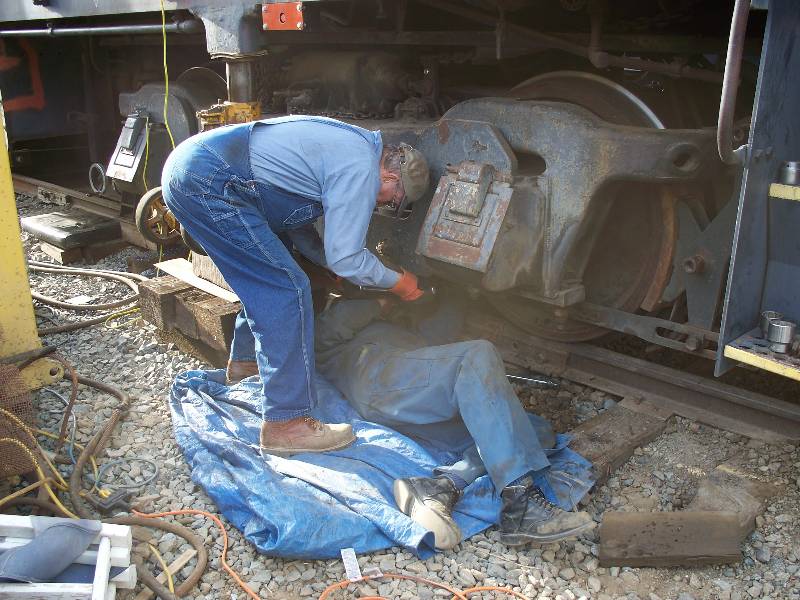 |
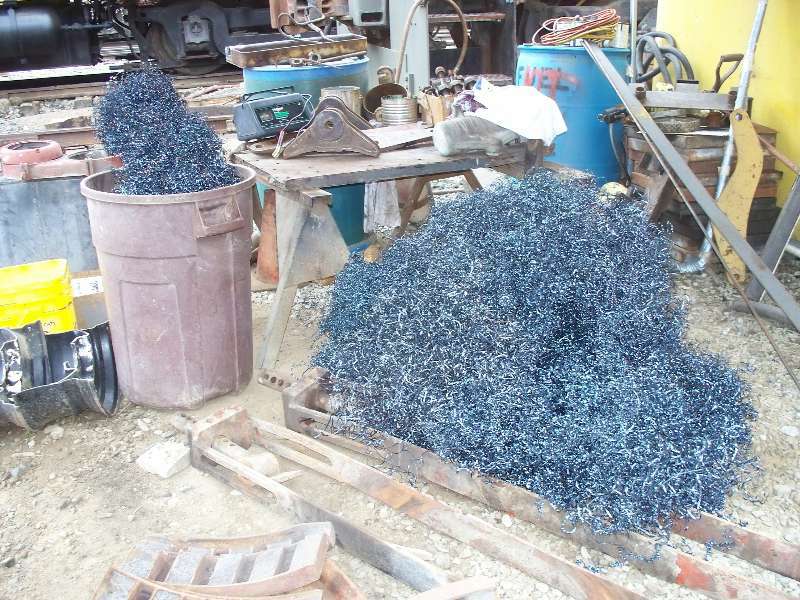
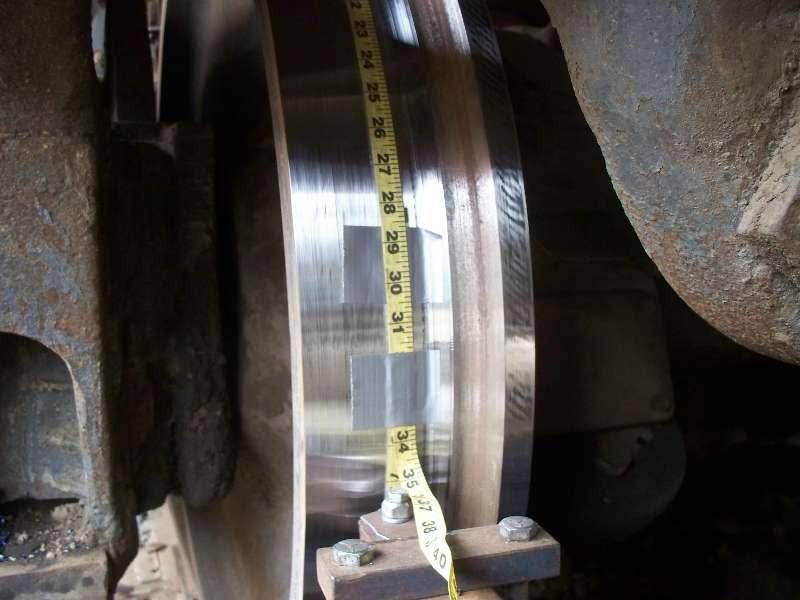
The cutting process produces a lot of steel wool. Photo #1 is of the cuttings from 2 wheels. This was an unusually large amount because one wheel was larger in diameter than the other and had to have some of the tread cut off. This forces the cutting of the flange to a new profile. The wheels on the same axle cannot vary more than plus or minus 1/4" in circumference. Just before cutting started, the wheel would be "taped" to determine its circumference. Photo 2 shows the tape checking the final cut on the tread before starting to cut a new profile on the flange.
 |  |
-------------------------
While
I was busy making tons of metal shavings, the rest of the Alco gang was
occupied repacking the wheel bearings. Each bearing box has a pad
which looks much like a mop stuffed with foam, the purpose of which is
to lay in a pool of oil and transfer the lubricant to the bearing
surface of the axle. The idea of the job is to remove the old
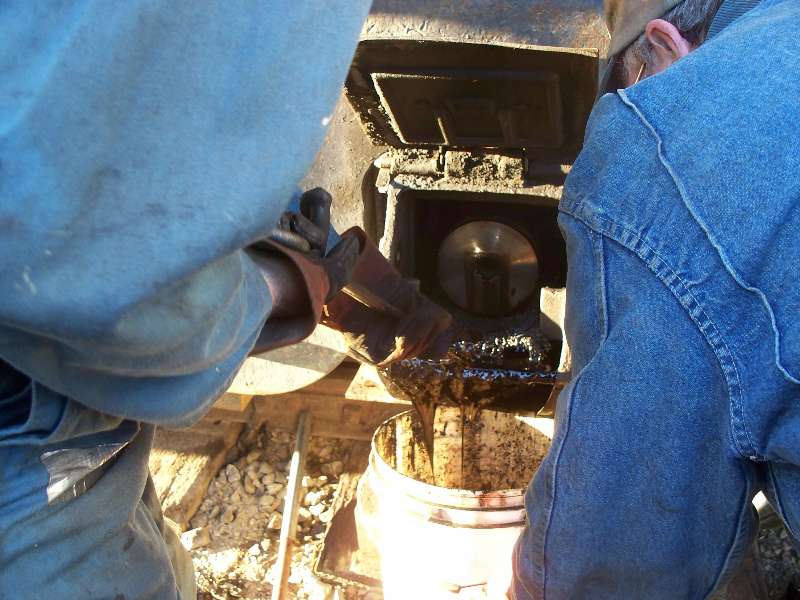
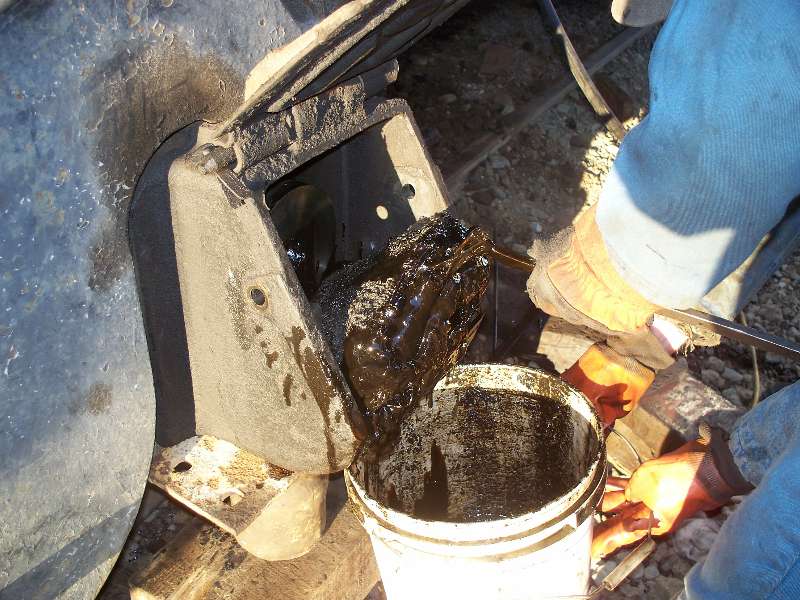
pad, clean the old crap out of the box and install a new pad and fresh
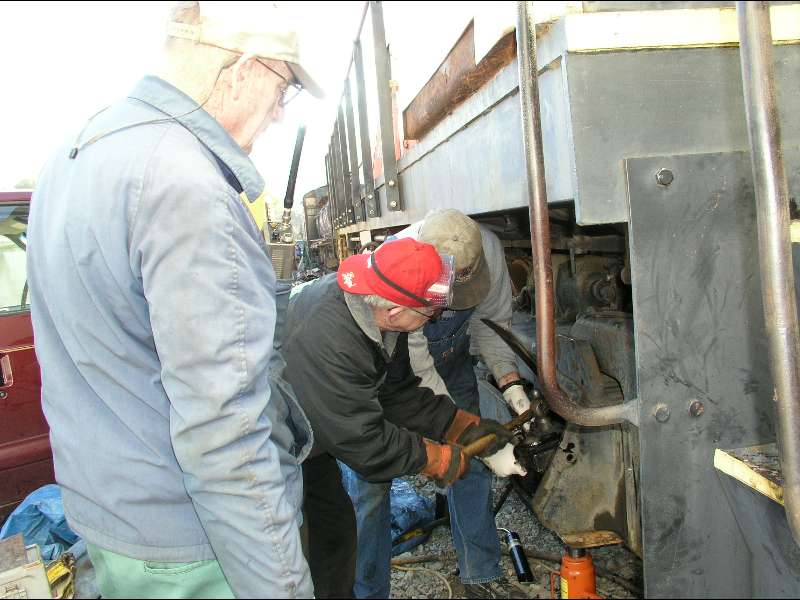
oil. Rich is seen jacking up the journal box and then
removing the bearing adapter. Jon stepped in to remove the
journal while Al is making new oil wicks for the axle end thrust
bearings.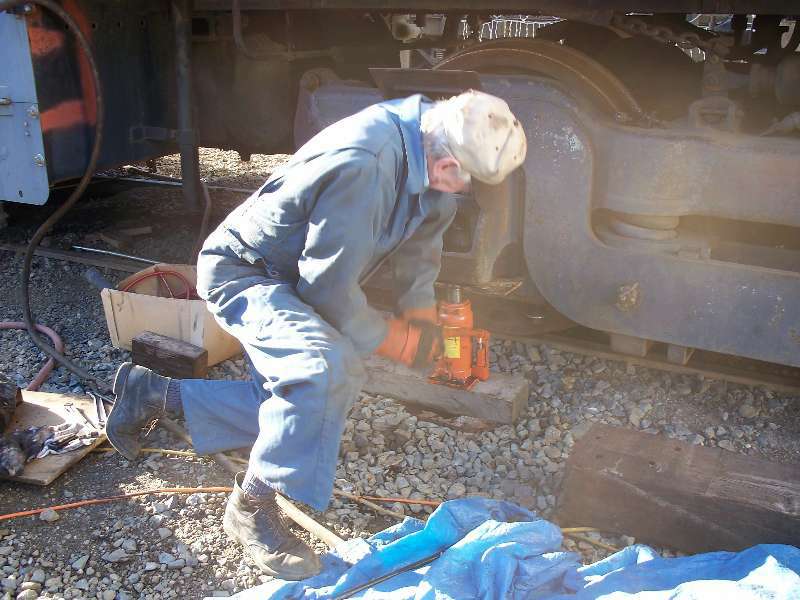 | 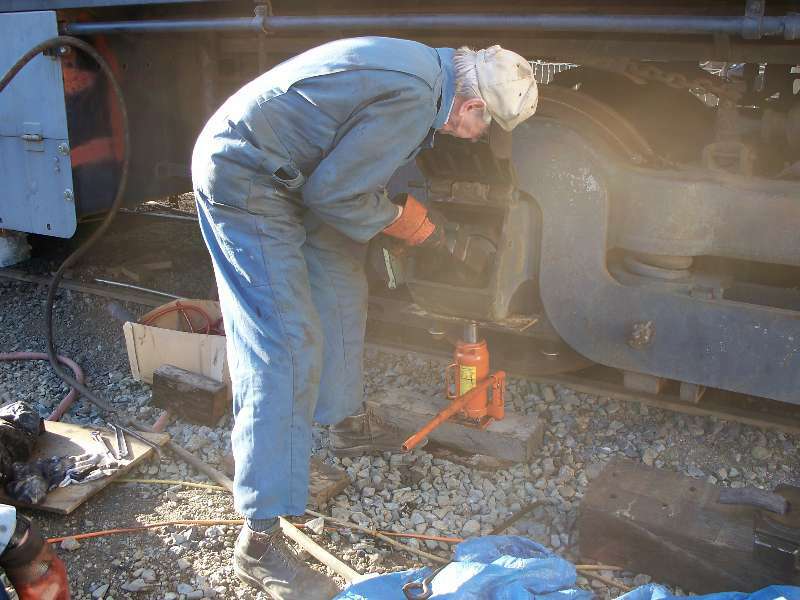 | 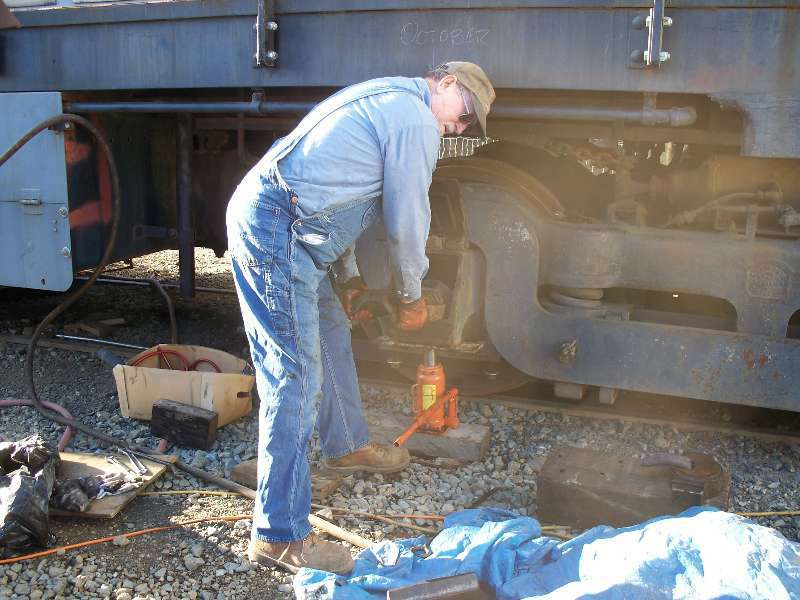 | 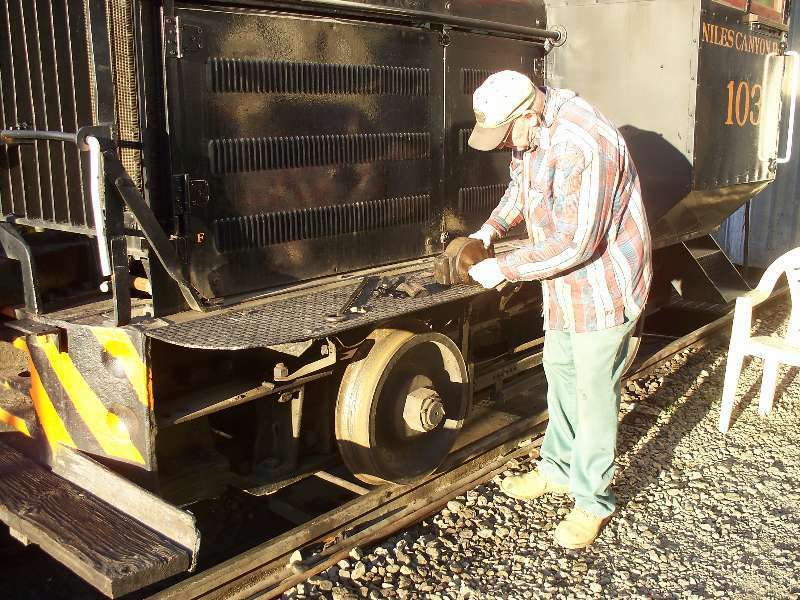 |
Once all the parts are out of the way, the lubricating pad is pullled. This sounds easy but as Rich found out, a pad that has been in the box for goodness knows how long (probably 30 years) is stuck in the gunk in the bottom of the box. Fortunately, we did not find any unusual bearing or journal wear which is a minor miracle given the condition of the "lubricant" in the boxes. Cleaning out the boxes was a joy that I am sure Rich and Jon would just as soon forget. New pads, fresh oil and new thrust bearing wicks make for some piece of mind. Pat Warren managed to get a photo of me helping Jon and Al by hitting something.
 |  |  Patrice Warren Photo |